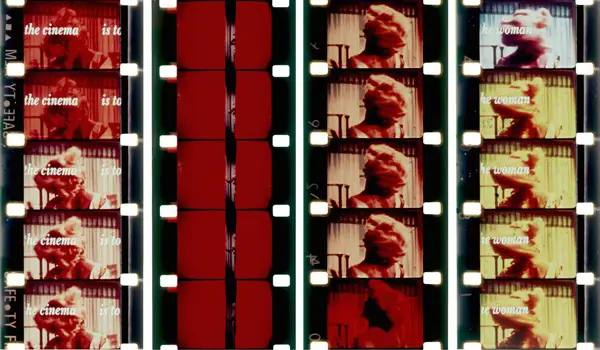
If something is too smooth for you to grasp, it slips through your fingers. I want to hold on to it so I can feel it.
A couple of years ago, while studying for a cultural management degree, I read a report by the Finnish Parliamentary Committee for the Future entitled Societal transformation 2018–2037: 100 anticipated radical technologies, 20 regimes, case Finland (Risto Linturi & Osmo Kuusi, 2019). Published before the COVID-19 pandemic, the report embraced an automated and thoroughly digital future, one in which there would no longer be any need to leave your home, whether in search of experiences or even to satisfy basic needs. One sentence in particular caught my attention: "There are strong academic and commercial incentives to eliminate friction in various ways." I found myself imagining the near-future human being perched inside four walls, consuming virtual art—because in a world where friction had truly been eliminated, it would be impossible to stay upright on the streets outside.
What does this have to do with Cinéstesia, Espoo Ciné's new programme dedicated to building bridges between cinema and the visual arts, particularly artists' moving image and analogue film? The connection is twofold.
First, the report exemplifies—perhaps inevitably, for a future-oriented scenario—an attitude that the philosopher Tere Vadén has described as the logic of the bypassed stage. Radical technology is expected to transform every aspect of society, with no reason to look back. Perhaps, for the sake of argument, I am poking at the report as somewhat of a straw man. Even so, the publication's updated edition (2026) likewise constructs a contrast between traditional or “passive” culture and the immersive participatory experiences made possible by new radical technologies. In the spirit of the French philosopher Jacques Rancière, however, I would argue that transcending the divide between “passive” spectatorship and “active” agency does not, in itself, require the latest technology. What matters more is an intellectual curiosity—one that does not shy away from contradiction or friction.
Moreover, from the perspective of art and aesthetic experience, lingering in history and revisiting the technologies of previous generations can be profoundly rewarding. This is not simply nostalgia. Rather, it means recognising possibilities in what the most impatient of us have already declared obsolete. In art, almost no technique or medium is ever truly superseded—except, perhaps, nitrate film, whose flammability made it dangerously impractical.
Analogue film is not an obsolete technology, even though the overwhelming majority of films are now produced, distributed, exhibited, and consumed digitally. New analogue film laboratories continue to open, and new generations of filmmakers are captivated by the format's unique possibilities. It may sound trite to point this out, but this summer's major commercial blockbuster, Christopher Nolan's The Odyssey, is fundamentally an analogue film: it was shot on 70 mm film using IMAX cameras.
Secondly: I love friction. I would not want to live in a world where friction has been eliminated. Such a world sounds not only dangerous but also profoundly dull. Friction occurs when two bodies or surfaces meet and come into contact with one another. As modern society has become seemingly effortless, those at the forefront have found themselves longing for precisely the kinds of difficulty and slowness that make life feel alive. “Frictionmaxxing” has become a trend, a development that many culturally attuned media outlets have also taken note of.
The same holds true for art: even a small amount of effort can yield immense pleasure. That is why we also need films that are not so smooth that they simply glide past us without leaving a trace. Films that allow both audiences and filmmakers to experience the joy of discovery—the exhilarating realization that this, too, is a way of making cinema.
I also believe that creative friction emerges when different contexts, audiences, and approaches are brought into contact within a single, already established film festival, rather than developing separate platforms for each new initiative and building everything from scratch. According to our audience research, Espoo Ciné visitors are particularly interested in other artistic disciplines beyond the seventh art. While the festival's backbone has, since the early 1990s, consisted of contemporary, high-quality European arthouse cinema, its programme has always included curious forays into experimental film as well as interdisciplinary and conceptually driven works.
Cinéstesia provides this strand of the programme the space to develop and be experienced within a meaningful curatorial context. In shaping it, we have looked to programmes such as the Experimenta section at the BFI London Film Festival, Wavelengths at the Toronto International Film Festival, and other similar international initiatives for inspiration. Above all, I have been inspired by the bold approach of the International Film Festival Rotterdam whose programme includes audience favourites and theatrical releases, experimental cinema, archival screenings, and works of expanded and live cinema.
Cinéstesia both is and is not a festival within a festival. It is entirely possible to devote yourself exclusively to Cinéstesia's concentrated programme during the final week of August: Erika Balsom's curated selection of archival screenings and presentations by invited artists Ben Rivers and Nour Ouayda; the Artisanal Films screenings, which bring together the history of local analogue filmmaking and the work of a new generation of filmmakers; live cinema performances; and a two-day seminar bringing together experts from both the fields of cinema and contemporary art.
Beyond its dedicated programme, Cinéstesia can just as easily be experienced through the cross-pollination the festival cultivates: by exploring Espoo Ciné's wider programme alongside it—or, conversely, by satisfying your curiosity with a single screening from the Cinéstesia selection. Enjoying Cinéstesia screenings does not require specialist knowledge or prior expertise—an open mind is enough. If you are interested in Cinéstesia, we can also recommend Intersection, another section within Espoo Ciné that showcases the more artistically adventurous end of arthouse cinema, including works shot on analogue film.
As Erika Balsom, Cinéstesia's first guest curator, writes in the introduction to her forthcoming essay collection Edges of Cinema (2026), the relevance and vitality of experimental cinema today cannot be reduced to an opposition between analogue and digital film. Rather, through their forms, aesthetics, and modes of presentation, works such as these encourage us to gather in shared spaces and events, to experience cinema together, away from the frictionless solitude and fractured attention of watching at home.
Tytti Rantanen
Executive Director, Espoo Ciné International Film Festival
We warmly thank Cinéstesia's main partner, the Saastamoinen Foundation, for making this new initiative possible; all the partners involved in the programme and the realisation of the event for their generous support and warm collaboration; and the Cinéstesia steering group for their inspiring and thoughtful engagement throughout the process.